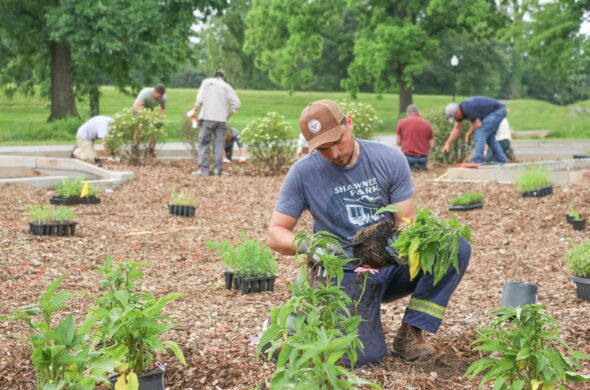
The sun is out and grass is growing! Bluegrass, a type of turf grass, may first come to mind but even in shaded, woodland areas there are native grass species to be found. In prairie and forested natural areas, the Team for Healthy Parks works to preserve the biodiversity of the graminoid layer as it contributes to a functioning ecosystem. This layer is comprised of grasses, sedges, and rushes; plants known for having growing tissue at the base of the leaf as they evolved with grazing animals (and now lawn mowers). Graminoids are also known for their deep, fibrous root systems that stabilize soil and prevent erosion but also provide habitat and nesting material for numerous species of insects and birds. We most commonly see Virginia Grass (Leersia virginica), Eastern Woodland Sedge (Carex blanda) Path Rush (Juncus tenuis) throughout the park system.
These ground layer species can be easily outcompeted by invasive species, in this case other grass species that are known to be some of the world’s worst weeds, rapidly changing species composition of an area which leads to loss of habitat for wildlife. You may know them as Johnson grass (Sorghum halepense) and Japanese stiltgrass (Microstegium vimineum). Ornamental grasses such as fountain grasses (Pennisetum) and silver grasses (Miscanthus) escape from yards surrounding the parks to create the same slew of issues. So before we get into the weeds, think about planting native grasses instead, Big Bluestem (Andropogon gerardii) is always a favorite!
Johnson grass is a warm-season perennial that was originally planted in the United States as a forage plant for livestock, but it is actually poisonous to these animals! The leaves are sharp on the edge and can often give “paper cuts” if managing without gloves. The stout, white midvein is a common way to distinguish it from other grass species. It forms dense stands that crowd out other species and spreads prolifically by seed, but also by extensive underground rhizomes that can grow nearly 300 feet in a growing season! The Team encounters this grass as they manage prairies, meadows, and woodland edges across the park system. Fortunately, this plant is not tolerant of shade so it will not further spread into woodlands. If Johnson grass is coming up on your property, we recommend bagging seed heads and any parts of rhizomes that are dug up.
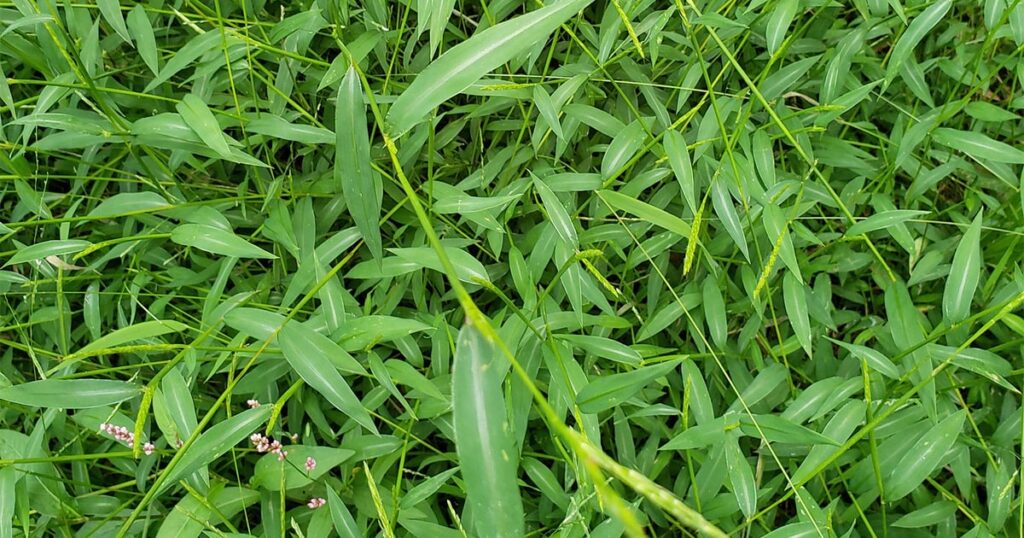
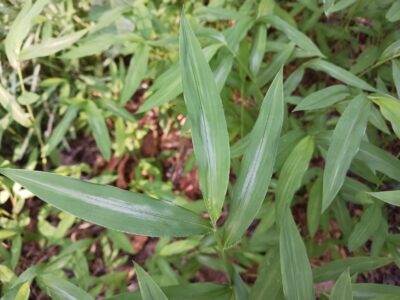
Stiltgrass poses a larger threat to natural areas across the Olmsted Park System. It thrives in shaded or sunny forests, prairies, stream banks, and roadsides. This grass is an annual but produces large amounts of seed that can take over acres quickly. A single Japanese stiltgrass plant can produce hundreds of seeds. In dense patches, this translates to a massive 5,000 to 15,000 seeds per square feet! Its lance-shaped leaves have a silver stripe down the center, the most common way to identify it. The root system of this plant is shallow and can be pulled without worry of resprout, so if you see small patches pull them quickly before seed is set! Stiltgrass has been a problem we are managing with success in Iroquois Park, but in the last few years it has made its way to Cherokee Park. Early detection and rapid response have kept these spreading populations manageable.
We thank our members for supporting a pillar of our mission to preserve the biodiversity of these unique, urban natural areas.
- Lauren Hendrickson, Natural Areas Specialist
Find something similar: News Cherokee Park Iroquois Park