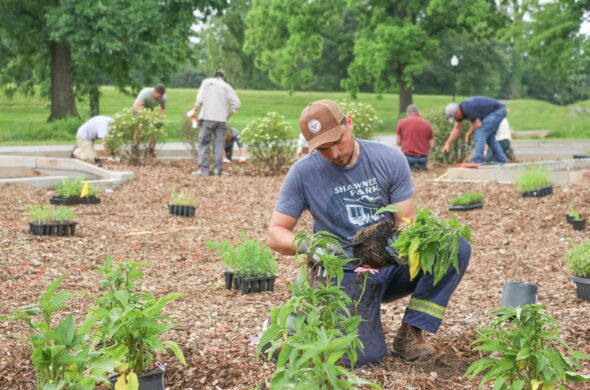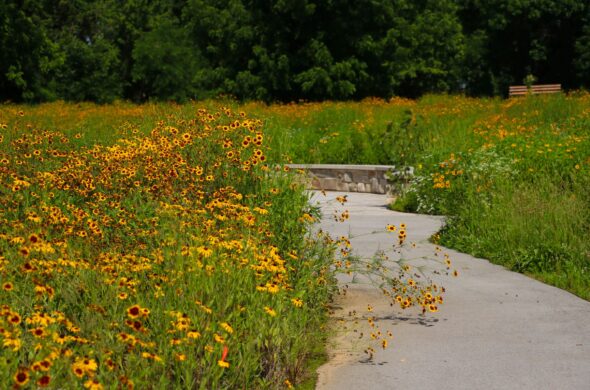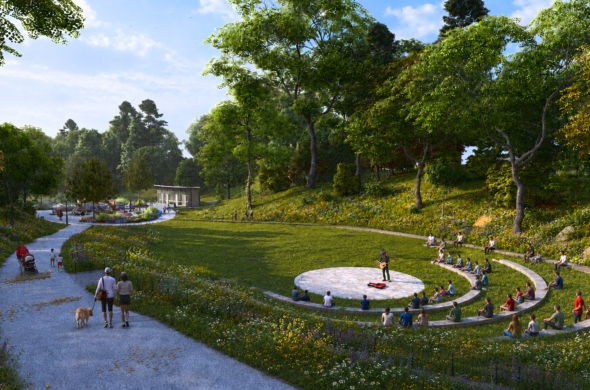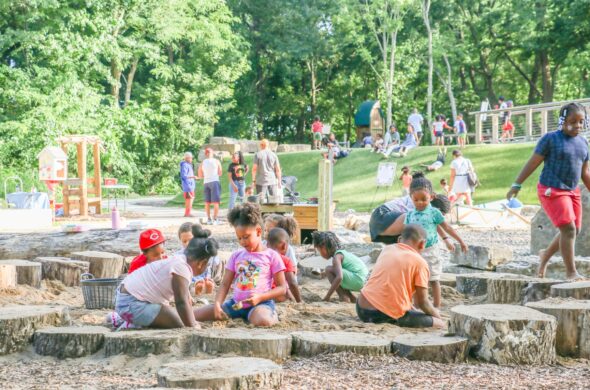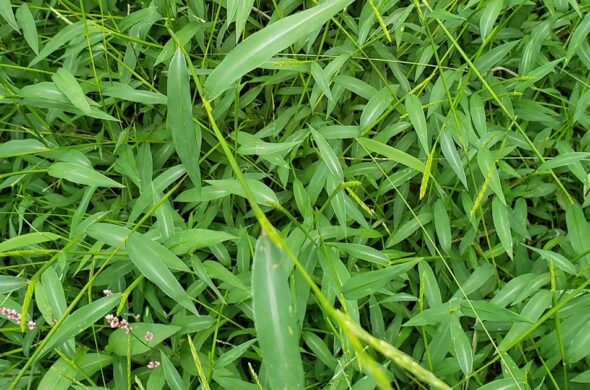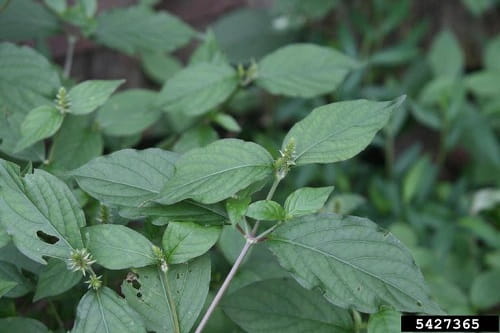
Spring has unfolded in Louisville’s Olmsted Park System! The Conservancy’s Team for Healthy Parks has been thrilled to see native plants spreading in areas where noxious plants are being managed. Woodland restoration at its finest!
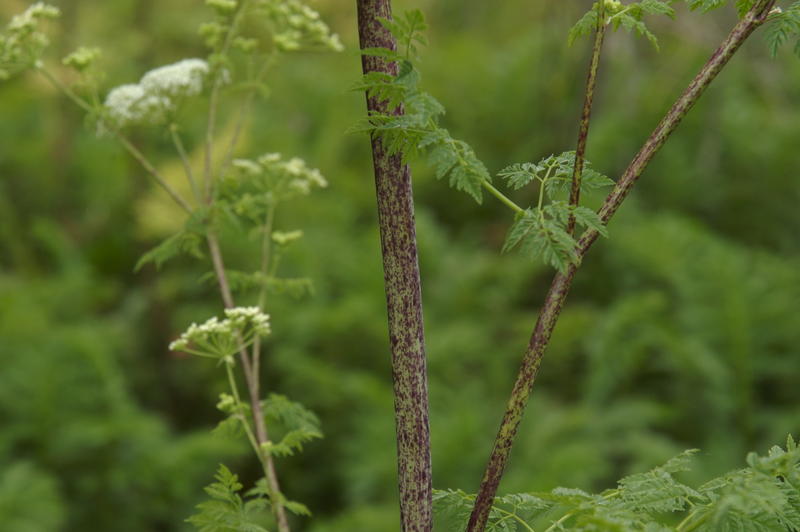
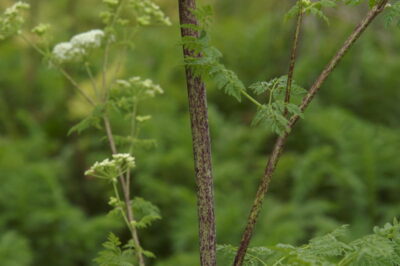
Two noxious plants that are managed during early spring are Garlic Mustard (Alliaria petiolata) and Poison Hemlock (Conium maculatum). Both are biennial plants, meaning that their life cycle takes place over two years. In the first year, they produce low-growing rosettes of leaves and develop deep taproots. In their second year, they send up a central stem with flowers and produce seeds. As these species establish in an area, they begin to obstruct nutrient cycling at an accelerated rate, altering the soil pH and severing mycelium networks in the soil so that native plants cannot utilize soil nutrients. Both plant species produce thousands of seeds that in turn thrive in the habitat they altered. The seeds are commonly spread via waterways during flood events, so monitoring riparian areas is a large part of management for species. These behaviors demonstrated are just a few examples of how invasive plants threaten native plant communities, causing native populations to decline and creating food deserts for wildlife. In their first year of growth, these plants can be easier to pull up and dispose of but ensure you take precautions when removing poison hemlock! The leaves are carrot-top like but the stems are speckled with purple dots. All parts of poison hemlock are poisonous if ingested and the sap can cause inflammation to bare skin, so protective clothing is a must!
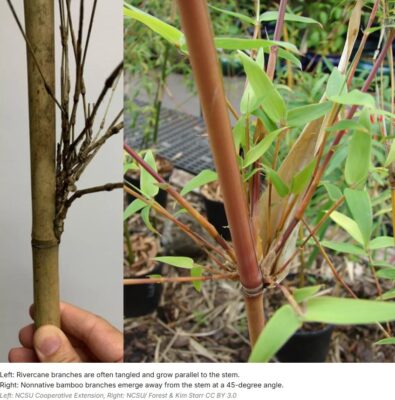
While we monitor noxious plants along the waterways of Beargrass Creek or the Ohio River, there are plenty of interesting native plants as well that support a healthy ecosystem by stabilizing soil and providing food and habitat for wildlife. Rivercane (Arundinaria gigantea) is just one of these plants, and to the untrained eye it could look like bamboo (a nonnative invasive). Both species are in the grass family, specifically woody grasses, and create large thickets. The dense vegetation once created by rivercane are called “canebrakes” that wildlife uses for cover and birds are known to nest in, all while the soil is held in place by their extensive rhizomes. If you are trying to identify between native cane and bamboo, the best difference lies in the branching! Rivercane branches extend from the node parallel to their stem, while non-native bamboo branches grow from the node at a 45-degree angle.
Today, rivercane only occupies about 2% of its previous range due to habitat loss, invasive species and land use change. The Conservancy has partnered with Harrod’s Creek Park to transplant rivercane from their healthy population to supplement sites in the Olmsted Park System, namely Cherokee and Chickasaw. Ensuring remnant populations of this keystone species live on to preserve the legacy of this plant is important both culturally and ecologically. The flagship parks of our park system were named to honor the Native Americans who managed the land before us, and the preservation of rivercane is just one way to keep honoring the land and cultures that support it. Thank you for your continued support in ensuring our parks are healthy and available to all, in perpetuity!
Find something similar: News