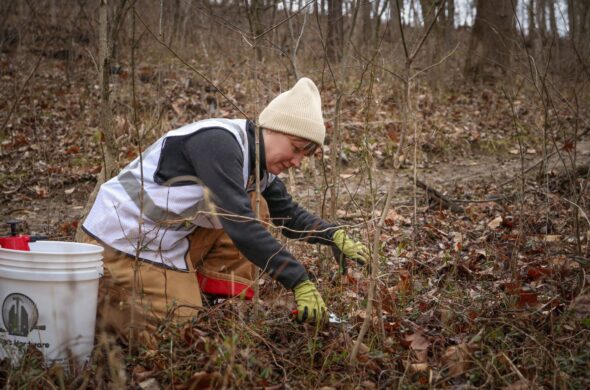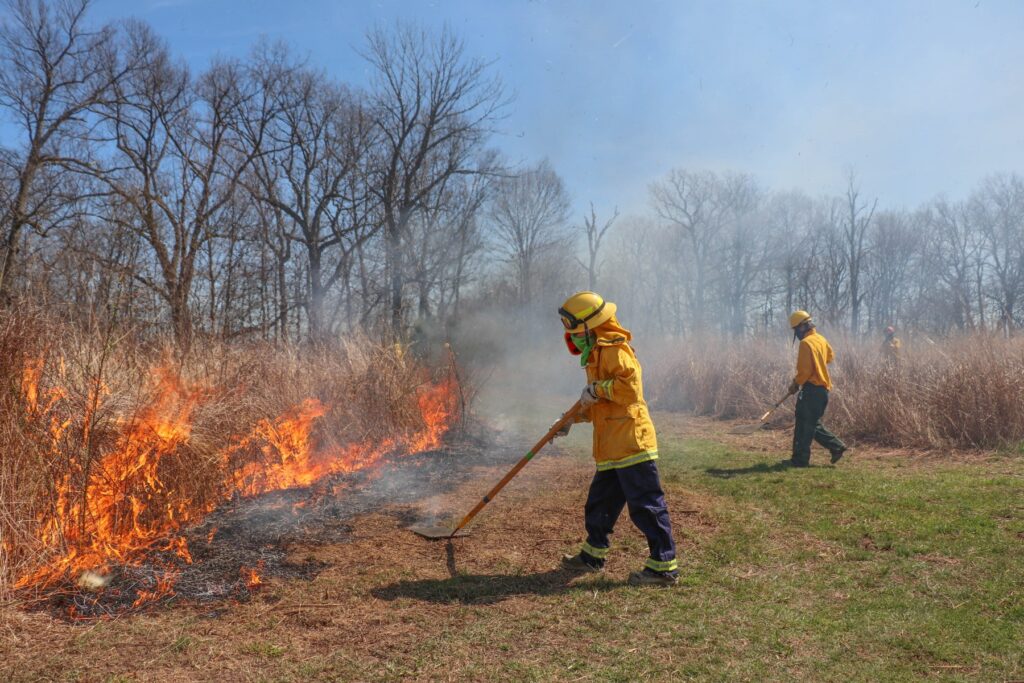
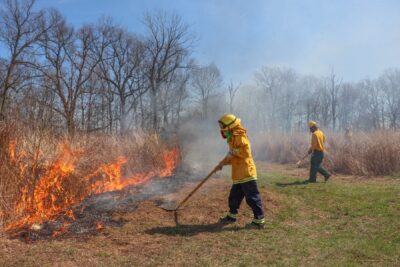
For the first time since 2023, conditions allowed for a prescribed burn at Iroquois Park’s Summit Field on March 24! We created 3/4 of a mile of firebreaks and burned 13.5 acres.
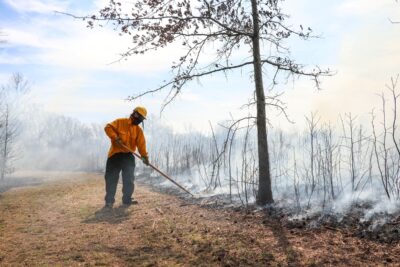
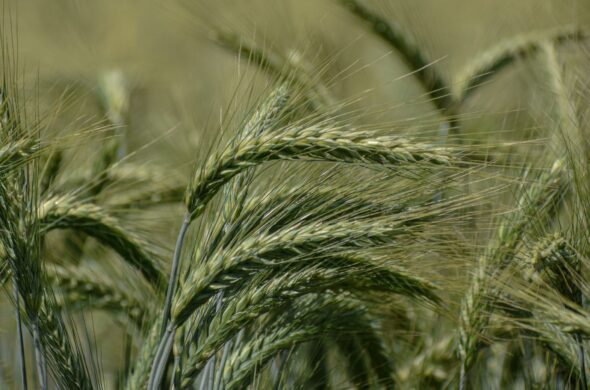
Summit Field that lies at the top of Iroquois Park is a rare ecosystem found within our Olmsted Park System. This 25-acre prairie is an oak-savanna, a niche habitat for specialized plants and animals that benefit from natural disturbances, such as wildland fire. Prairie species evolved with fire ecology, evolving adaptations such as thicker bark on oaks trees and deeper roots on herbaceous plants. Prescribed fire also helps eliminate woody plants that would shade out the prairie flowers too quickly, as the oak trees that are adapted to this habitat grow slowly and allow the understory to fill with native prairie grasses and forbs.
Oak-savanna habitats are increasingly rare, so it is important that we preserve this habitat for migrating birds and animals that call it home year-round. Rattlesnake Master (Eryngium yuccifolium) and Bur Oaks (Quercus macrocarpa) are just two species found in Summit Field that benefit from fire. After prescribed burns, the Ragged Fringed Orchid (Platanthera lacera) is also observed here but can disappear into the seed bank when the native grasses get too thick. This is why burning in different seasons is beneficial, as spring burns promote grass growth, while fall burns promote forbs. So, the next time you catch wind of a prescribed fire at Summit Field, it will likely be during the fall! As well as seasonal rotation, we also rotate sections of the prairie that receive fire, to ensure there is diverse prairie habitat. Ideally, leaving one section alone each year while another section is mown or receives fire.
Find something similar: News Iroquois Park